
 ब्लॉग पर वापस जाएं
How to Increase Milk Production: A Complete Guide for Indian Dairy Farmers
Maximizing milk production is the single most important goal for any dairy farmer. Whether you manage a small herd of five cows or a commercial dairy of five hundred, the principles of high-yield nutrition remain the same. At Nutricana, we have spent over fifteen years perfecting cattle feed formulations that consistently help farmers achieve measurable gains in daily milk output.
Why Feed Quality Is the Foundation of High Milk Yield
A lactating cow converts feed nutrients into milk. If the feed is deficient in energy, protein, or minerals, the cow simply cannot produce to her genetic potential. Studies conducted at the National Dairy Research Institute (NDRI) have shown that balanced compound feed can increase milk yield by 15 to 25 percent compared to traditional khal-chokar mixtures. The key lies in providing the right ratio of energy to protein at every stage of lactation.
Energy-Protein Balance: Getting the Ratio Right
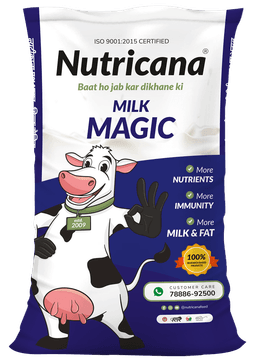
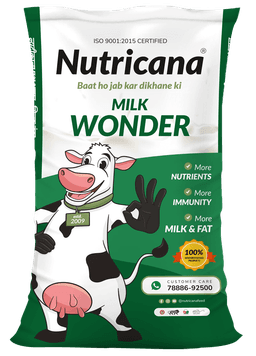
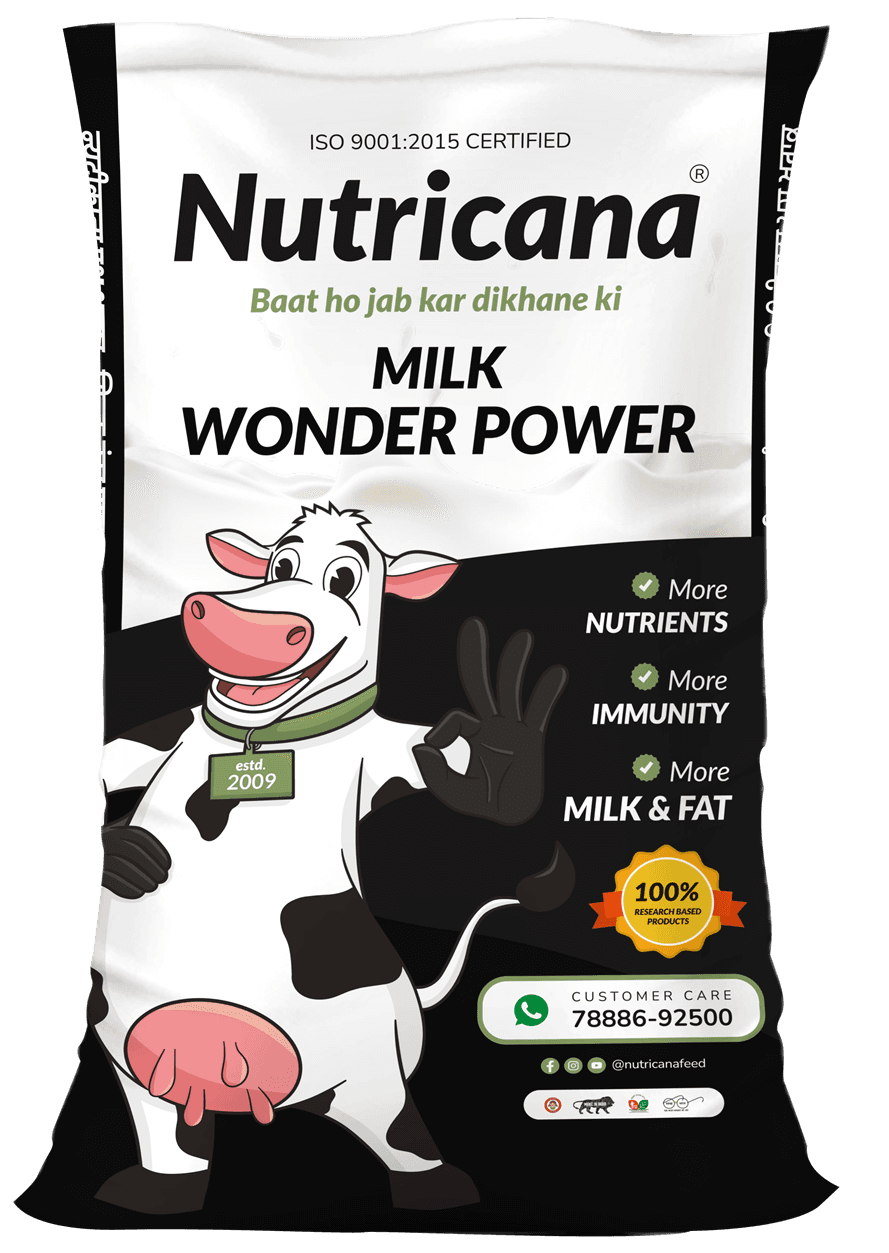
During peak lactation, a cow producing 15 litres of milk per day requires approximately 18 percent crude protein and a Total Digestible Nutrient (TDN) value of at least 70 percent in her concentrate feed. For every additional 2.5 litres of milk, roughly one kilogram of extra concentrate is needed. Nutricana's Milk Wonder and Milk Wonder Plus are formulated to deliver this precise balance, ensuring cows receive adequate rumen-degradable and bypass protein for sustained production.
The Critical Role of Minerals and Vitamins
Calcium, phosphorus, magnesium, and trace minerals like zinc, copper, and selenium are non-negotiable for high-producing cows. A deficiency in calcium alone can reduce milk yield by up to 20 percent and increase the risk of milk fever. Nutricana feeds include scientifically calibrated mineral premixes with optimal calcium-to-phosphorus ratios, so farmers do not need to purchase separate mineral supplements.
Water: The Most Overlooked Nutrient
A cow producing 20 litres of milk needs 80 to 100 litres of clean drinking water daily. Water intake directly correlates with feed intake and milk output. Ensure water troughs are clean, shaded, and accessible at all times. During summer months, water consumption can increase by 20 to 30 percent.
Feeding Schedule Optimization
Divide the daily concentrate ration into three or four smaller meals rather than two large ones. This approach maintains a stable rumen pH, improves nutrient absorption, and reduces the risk of acidosis. Feed concentrate before or during milking to stimulate let-down and maximize output.
Practical Steps to Start Today
Switch from loose, unformulated feed mixtures to a balanced compound feed like Nutricana Milk Wonder Plus. Ensure fresh green fodder is available alongside dry roughage. Monitor individual cow production weekly, and adjust concentrate quantities by one kilogram for every 2.5-litre change in daily yield. These simple steps, consistently applied, can transform your dairy's profitability within a single lactation cycle.